
The statement comes even as Tehran links the issue to ongoing efforts to bring a complete end to hostilities in West Asia involving the United States and Israel.

Iran has put forward a comprehensive 10-point framework that it says forms the basis of a complete resolution.

'Uranium supply is going to come under increasing pressure.'
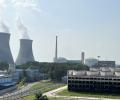
Atomic Energy Commission Chairman Ajit Kumar Mohanty announced that India's private sector is projected to invest Rs 7.5 lakh crore and contribute 30 GW towards the nation's goal of achieving 100 GW nuclear power capacity by 2047. This marks a significant policy shift, facilitated by the SHANTI Act, encouraging private participation in nuclear energy beyond the traditional public sector model. The country is also exploring Small Modular Reactors (SMRs) for industrial needs and advancing its three-stage nuclear power programme, leveraging its substantial thorium reserves.

The International Atomic Energy Agency (IAEA) has concluded its first physical protection advisory mission to Pakistan, stating that the country has established a "robust nuclear security regime" for its nuclear material and facilities. The mission, conducted from September 28 to October 9, reviewed Pakistan's legislative framework and assessed measures at a nuclear facility, noting continuous improvements and contributions to nuclear security expertise.

Iranian President Masoud Pezeshkian delivered a strong address at the UN General Assembly, rejecting US allegations against Iran and accusing Washington and Israel of aggression and terrorism. He criticised US sanctions, defended Iran's peaceful nuclear programme, and highlighted the Palestinian issue.

A senior Pakistani defence official, Lt Gen (retd) Mazhar Jamil, claimed that India's long-range missile development indicates ambitions to become a global nuclear power capable of threatening Western capitals, urging international attention to India's military modernisation. He also reiterated Pakistan's commitment to deterrence stability in South Asia.

Atomic Energy Commission chairman Ajit Kumar Mohanty stated that India is on the verge of a significant technological transformation, driven by advancements in AI, quantum technologies, and other fields. Speaking at BIT Mesra's convocation, he emphasised the need for strong indigenous capabilities, skilled professionals, and interdisciplinary collaboration to achieve a developed India. Other speakers, including BIT Mesra's Chancellor and Vice Chancellor, echoed the importance of continuous learning and contributing to national progress.

India is increasingly focusing on long-range weapons capable of reaching targets across China.

The US rejected Iran's proposal to reopen the Strait of Hormuz, citing Tehran's demands for sanctions relief and access to frozen assets before nuclear program negotiations. US Ambassador Mike Waltz called the offer a "cynical attempt," while Iranian Foreign Minister Seyyed Abbas Araghchi disputed Waltz's account and reiterated Iran's readiness for both diplomacy and renewed hostilities. President Trump expressed confidence in winning the conflict soon and keeping all options, including military strikes, on the table, with denying Iran a nuclear weapon as the primary objective.

The United States military has developed fresh strike options against Iran that include the potential use of the GBU-43/B Massive Ordnance Air Blast (MOAB), widely known as the "mother of all bombs", to target energy infrastructure and nuclear sites, CNN reported, citing multiple US officials familiar with military planning discussions.

US President Donald Trump has shared a map on Truth Social showing the Strait of Hormuz labelled as "Trump Strait".

He said Pakistan was working with the international community to ensure the security of its nuclear installations, which were always in safe hands.
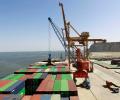
The customs officials, based on an intelligence input, halted a Malta-flagged merchant ship -- CMA CGM Attila -- at the port en route to Karachi on January 23 and inspected the consignment, which included a Computer Numerical Control (CNC) machine, originally manufactured by an Italian company.

Prime Minister Benjamin Netanyahu stated that Israel and the US struck Iran because Tehran had restarted its nuclear programme and it would have gone 'immune within months'. He claimed Iran was building new underground sites to shield its missile and nuclear programmes from attacks.

US President Donald Trump has expressed interest to his advisers in setting up a meeting with Iranian officials present in New York for the UN General Assembly's 81st session, "if the conditions are right."

Iran has conveyed seven conditions to the United States through Qatari mediators for starting negotiations to end the ongoing war, while warning that Tehran is prepared for a "decisive war" if Washington rejects its demands.

Sources have told FT that Iran will offer talks without preconditions.

The Natanz nuclear facility is one of Iran's key nuclear installations and has previously been at the centre of international concerns over Tehran's nuclear programme.
"We have eyes onto the Iranian nuclear programme and we would be aware of any so-called breakout move by the Iranians towards building a nuclear weapon. That has not occurred, but that window of opportunity will close at some point," the White House Press Secretary, Jay Carney, told media persons at his daily news conference.

In many ways, this is only the beginning -- of a new chapter in India's nuclear story, and of a future where its vast thorium reserves could finally power its ambitions.

United States President Donald Trump and Iranian President Masoud Pezeshkian have virtually signed a 14-point memorandum of understanding (MoU) to end hostilities, reopen the Strait of Hormuz, and begin a 60-day negotiation process on sanctions and Iran's nuclear programme.

Pakistan capital Islamabad is emerging as the leading venue for the next round of technical negotiations between the US and Iran, a media report said Sunday.
The United States on Friday said it had eyes and visibility inside Iran's nuclear programme and would know if and when Iran made a breakout move towards acquiring a weapon.

World Letter Writing Day is a time to recall historic letters. Some letters were written in love. Some in grief. Others at moments when the world stood on the brink of change.
The Pakistan government has no plans to roll back the country's atomic programme and is committed to maintaining a minimum nuclear deterrence, Parliamentary Affairs Minister Babar Awan said Tuesday. The Pakistan People's Party-led government will not compromise on the country's defence and sovereignty, he said in the National Assembly or lower house of Parliament.

The US military carried out 'self-defence strikes' targeting Iranian missile launch sites and boats near the Strait of Hormuz, even as President Trump announced progress in ceasefire negotiations, stating Iran's enriched uranium will be 'turned over' or destroyed.

US Secretary of State Marco Rubio kick-started a three-day visit to India on Tuesday to advance bilateral ties in energy, trade and investment, defence, critical technologies, and exchange views on the West Asia crisis.

Top leaders from the US, Iran, and Pakistan, along with other nations, have gathered in Switzerland for high-level talks aimed at restoring peace in West Asia. These negotiations follow a recently signed Memorandum of Understanding between the US and Iran, initiating a 60-day window for a deal. Discussions focus on Iran's nuclear programme and the fragile interim peace deal, amidst renewed tensions and the fluctuating status of the Strait of Hormuz.

'We were in a heavily nuclearised environment. China had tested for Pakistan in the 1980s and helped their missile programme stay just one step behind us.'

US and Iran officials have reportedly agreed to de-escalate tensions and ensure free passage through the Strait of Hormuz, with technical talks scheduled to continue. This development follows months of conflict, rising gas prices, and strained diplomatic relations, marked by recent retaliatory strikes and threats from both sides. Further discussions on Iran's nuclear program are set to take place in Qatar, highlighting ongoing diplomatic efforts despite recent volatility.
US President Donald Trump has announced the cancellation of a planned attack on Iran, contingent on Tehran agreeing to rapidly open the Strait of Hormuz and end its nuclear programme. This decision follows appeals from Middle Eastern countries and includes Israel's commitment, though Iran had previously warned against any "adventurous action" from the US.

One of the important topics of discussion between the two leaders is expected to be the Northern Sea Route and the Chennai-Vladivostok Maritime Corridor.
Pakistan Prime Minister Shehbaz Sharif clarified that the recent Memorandum of Understanding (MoU) signed between the US and Iran does not include provisions regarding Tehran's ballistic missile programme. This statement followed talks with Iranian President Masoud Pezeshkian, with Sharif emphasising Iran's right to its defence capabilities and Pakistan's role as a mediator in the US-Iran peace process.

Donald Trump stated that Iran has been given a "last chance" to reach an agreement, revealing that the US paused a planned military strike after receiving requests from Saudi Arabia, the UAE, Qatar, and Iran to pursue diplomacy instead.

On the 25th anniversary of that world-changing morning in New York, it is also for the rest of to reflect. Not only on those who were killed but also on why the event happened and what led to it and what came after it, asserts Aakar Patel.

Newly declassified documents from the United States National Security Archive have revealed that Pakistan's nuclear proliferation was a significant concern for both the US and Russia, with leaders expressing 'nervous' fears about the country's atomic stability.

On the eve of the most crucial round of talks between Iran and the world powers, the United States has said that Tehran has a choice to make in the coming weeks to address concerns about its military nuclear programme.
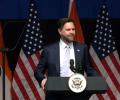
US Vice President JD Vance on Friday dismissed reports suggesting that Iran would receive financial incentives merely for signing the peace deal between Washington and Tehran aimed at ending the hostilities in West Asia, calling such claims "fake information".

Donald Trump has issued a stern warning to Iran, stating that the US will take a tougher stance if a diplomatic resolution regarding its nuclear programme is not reached soon.
